Tuesday, March 12, 2024

Dhaniya Farming


Coriander

It is used in daily eating vegetables, as ingredients for taste. The price of coriander is around 500 to 600 rupees per kg. Here, how we grow coriander in field is introduced. It is great source of income for farmers. The coriander is seasonal cereals which take 3 to 4 months to product come out. 

    Farmers are taking advantage of coriander farming. First, the field is grind by tractor or other devices so that the seed of coriander can grow easily, then very small amount of water is shed in the coriander field. Too many water or collection of water is bad for coriander. So, water supply should be controlled during coriander farming. The spread of coriander seeds should be 2-3mm in distance, so the stem and flower and fruits will grow well and the yield is high.

In this way coriander is farmed in field and come to the market place and milled in powder form.  

Monday, March 11, 2024

Tharu typical marriage


Typical marriage ceremony in Tharu ethnic culture,  as shown in the picture bride and groom making several culture procedures on the stage. Flower wreaths wearing each other, 5 unmarried girls from bride side standing in the side of bride and groom to protect, for perfuming as well as worshiping the bride and groom. From male side several people of his relation people came with bands with DJ and unite before entering female village/hometown. If they arrive near by female house , they started dance with bands and DJ , the groom sit on car with decoration while arrived in front of bride house (which was decorated) , there is several procedures started by now and finished in one day.

Marriage procedures : 3 days of celebration

1.Worshiping (Katha) , 1st day

2.Matkor, 2nd day

3.Marriage day


1.Processes in the worshiping day:

It is 1st day of marriage ceremony, relational peoples are arrived (who are invited to the marriage ceremony). It is started by worshiping Hinduism ways, as Tharu are Hindu. They are worshiping gods, sometimes they play Basaha (Tharu cultural program).


2.Processes in the Matkor, 2nd day:

The 2nd day of marriage ceremony, people of both sides they went to every houses of his/her village which is called Bilauki. And then they went to near by temple and then goes to the mango tree for the next marriage ceremonial worshiping. In the night time of same day, they celebrate Haldi procedures, in which elders come to overlap turmeric pest to his/her body with oil. And they are dance with music.


3.Marriage day:

As described above, from male side every invited as well as his villagers unite and come to bride house with bands and DJ along with dancing and till they arrived to bride house. Now, the 1st step while arrived to the bride house, the elder of bride side worship the groom (The male who come to marriage), now groom come down from decorated Car. Then after the next step is ribbon cutting which is holding unmarried girls of bride side and ask for money to proceed. They after finishing this, the Groom now come to Stage. Now, every people who come with groom sit in front of stage. 5 girls (younger sisters of bride) come to the stage with bride. Bride and groom worship each other with flower wreath then from male side, he wear the golden ring to the bride finger. Now, Bride Face watching ceremony started, people from groom (male side) come and see the bride face and give some worthy things (money, gold, silver).

Maro(from bride side, it is made in the Matkor day, small house for the marriage celebration).

The groom brought to the Maro, and started several procedures, like shoes stolen by bride sisters and asking for money. In this way, marriage goes on and at last the Dowery brought along with bride to the groom house.

At last, the next day of marriage, Preeti vhoj started and ending marriage ceremony.


Sunday, October 30, 2022

CHHAT THIS YEAR 2022 HEADS ON


CHHAT THIS YEAR 2022 : This is the last festival of three major festival of Hinduism in which first started by Dashain festival then Diwali festival at last CHHAT . Almost all three festival are high value in Hinduism and mostly people are involved of the Country , India , Nepal , Bangaladesh. This is believed to worship of land at ground level , in which a bumb of land which are near by river and close to populous are decorated to celebrate the festival . Who are doing this festival are one day and one night are playing without eating . They are arranged all the vegetables which are grown by farmer like , sugarcane , lemon , banana , apple , orange , mausami etc , as well as making thekuwa , batasha , ladu which are placed in on pot which are made of bamboo . Then they will take to the CHHATI ghate aside of river and worship of sunset at evening of fist day of CHHAT . Then the second day at morning they take the goods and worship of sunshine and finishing this festival . This is to believe that this brings control over expensive of good that are stabilizing the price of good . Otherwise , leaving allowance   will be expensive . Other aspects of this festival is to bond between family is very strong , who are gone outside from family to work will return in this festival . This culture is brings strong bond between family members .
 
      Economically this festival decrease , the country GDP during this period people are engaged in this festival and unable to work in field , factory , office . They celebrating festival mean while economy of the country decreases in drastic way which brings poverty . 
 
      Community aspect , this festival brings strong bonds and understanding between people and strong community . Who are belongs to poor family , community lets them to work strongly and provide work security by this festivals . Nobody are fear from theft ,  gang war  , fraud . They can easily establish own business by doing this festivals . One major aspect of this festivals , giving people  internal power to live life , work , gathering people , meeting people , working together living together . Most of the people are gathering from every houses in all in one place to celebrate this festival . So , this brings social stability , understanding people . In this way grossly following this festivals are good for living life , way of living or just say art of living . Otherwise , mostly people may suffer from dementia , depression , obsession , in this aspect living with this festival  is also good for health .    

Monday, October 24, 2022

DIWALI THIS TIME


DIWALI THIS TIME:

This time Diwali festival heads off just after Dashain as usual and brings joy and prosperity to all men kind. By making Rangoli in front of Door , making unique colorful and with lights showing their house with decorations. So , every houses are showing that just like  we are succeed in making society greater in comparison with m other. Here , in Hinduism this festival reveal after great goddess Durga  mata won the battle between demon and god . After all , goddess defeat the demon and everybody celebrating in the name of victory of goddess . Nowadays, people who are belongs to Hinduism , are celebrating wherever , they are in the world . every people in the world worship goddess mata Durga , in this festival .


Diwali also called Tihar in Nepali , Dipawali or Yamapanchak. Tihar is analogous to the Indian festival of Diwali , the festival of lights, but some significant differences.

Like with Diwali, Tihar is marked by lighting diyo inside and outside the home but unlike the Indian festival, the five days of Tihar include celebration and worship of the four creatures associated with the Hindu god of death Yama, with the final day reserved for people themselves. According to the Vikram Samvat calendar, the festival begins with Kaag (crow) Tihar on Trayodashi tithi of Kartika krishna paksa (the 13th day of the waning moon) and ends with Bhai Tika on Dwitiya tithi of Kartika sukla paksa every year.

Rangoli is an art form that originates from in the Indian subcontinent, in which patterns are created on the floor or a tabletop using materials such as powdered lime stone, red ochre, dry rice flour, coloured sand, squartz powder , flower petals , and coloured rocks. It is an everyday practice in Hindu households, however the colours are preferred during festivals and other important celebrations as it is time consuming. Rangolis are usually made during Diwali or Tihar, Onam, Pongal and other Hindu festivals in the Indian subcontinent, and are most often made during Diwali. Designs are passed from one generation to the next, keeping both the art form and the tradition alive.

Tuesday, April 6, 2021

Advancing in medical science


 INTRAVENOUS IMMUNE GLOBIN (IVIG) ADMINISTRATION IN NEONATES:

Patient population:

Neonates with isoimmune hemolytic disease of the newborn due to Rh or ABO incompatibility. Although data are limited, IVIG may be helpful in other types of Rh hemolytic disease such as anti-C and anti-E. It may be considered for non-isoimmune causes of hemolytic anemia such as G6PD deficiency.

Other indications for IVIG in neonates include immune thrombocytopenia and overwhelming sepsis.

Criteria for Use in Isoimmune Hemolytic Disease:

In Rh or ABO hemolytic disease, if the total serum bilirubin is rising despite intensive phototherapy or the total serum bilirubin level is within 2 to 3 mg/dL (34-51 μmol/L) of the exchange level.

Suggest guidelines from Hammerman 2000

Total Serum Billirubin (TSB) Levels for IVIG Administration in Term Healthy ABO-incompatible Coombs-positive Neonates.

AGE

TSB level despite 4 hours of phototherapy

<12 hours

204 mcmol/L (12 mg/dL)

12-24 hours

272 mcmol/L (16 mg/dL)

25-72 hours

306 mcmol/dL (18/dL)

 Additional Criteria: Hb<130 g/L

Consider administration as early as possible when active hemolytic disease of newborn is diagnosed and exchange transfusion is a possibility.

Intravenous gammaglobulin has been shown to reduce the need for exchange transfusion, repeat exchange transfusions, the duration of hospital stay, and phototherapy in Rh and ABO hemolytic disease. The mechanism of action appears to be related to blockage of Fc receptors in the neonatal reticuloendothelial system.

Contraindications

Neonates with IgA deficiency or hypogammaglobunemia (with IgA antibodies in the patient's serum)-risk of hypersensitivity or anaphylactic reactions .

Dosage and Administration:

Use Gamunex (10% Immune Globulin Intravenous (Human)), a ready-to-use sterile solution of human immune protein for intravenous administration.

Dose of 0.5 g-1.0 g/kg IVIG should be infused over 2 hours. If necessary, the dose can be repeated in 12 hours.

Sample Calculation

Gamunex is supplied in 2.5 g and 5g vials. To minimize wastage, choose the nearest vial size according to the patient's weight to administer within the range of 0.5-1.0 g/kg.

For 3 kg infant:

Dose of IVIG= 3kg x 1.0 g/kg= 3g (round to 2.5 g)

10% Solution has 1.0 g in 10 mL or 2.5 g in 25 mL

Infuse at 1.5 mL/hr (0.5 mL/kg/hr) x 30 minutes 

If tolerated, increase  to 12 mL/hr (4 mL/kg/hr) to infuse total volume approximately 2-2.5 hours.

For Gamunex, the maximum allowed rate of infusion is 8.4 mL/kg/hr

Monday, April 5, 2021

Spring Season Heading Off


 Nepal is, undoubtedly , a naturally country that enjoys pleasant weather round the year. Its geographical diversity has divided the Seasons in Nepal into five weather zones-tropical, temperate zone, cold zone, sub artic zone and the artic zone.

The country enjoys different seasons of spring, summer, monsoons, autumn, and winter. However, the spring and autumn season offer the ideal time to visit the country when it is neither too hot, nor too cold.

Spring season in Nepal:

Spring season in Nepal continues from March till May. It also offers the best time to visit the beautiful country of Nepal. In this particular season, the country attracts large number  of tourists. The months of March-April are considered the second best season for marketing, the best time being October-November.

Summer In Nepal:

The month of June heralds arrival of summers which lasts till August. During the summer months, the average temperature lingers around 28 C. However, the terai and hilly areas experience much higher temperature due to scorching sun.

Monsoon in Nepal:

Nepal receives monsoons from June that continues till September, with 2,500 millimeters of rain every year. After monsoons, starts the dry season from October till November which offers enjoyable weather, as countryside gets lush green after the rains.

Autumn in Nepal:

As the natives get a little relief from scorching summers and heavy rains, then comes autumn which lasts from September to November. This is certainly the best time to visit Nepal, as the surrounds get clear by summer monsoons. During autumn months, the weather remains pleasant, not much affected by cold. 

Winter season in Nepal:

Nepal enjoys winter season during December-February . The temperature reaches almost the freezing point during these months, while hilly regions experience rough weather and heavy snowfall.

Locally, seasons in Nepal is also categorized into 6 divides. Each lasting 2 months.


Thursday, March 18, 2021

Gene X-pert system are slowly presenting in developing countries


GeneXpert MTB/RIF assay is a rapid diagnosis test of Tuberculosis (TB) and drug resistance. It is revolutionizing TB control with aids in prompt diagnosis and treatment (selection of appropriate TB regimen).

GeneXpert MTB/RIF assay is a nucleic acid amplification (NAA) test which simultaneously detects DNA of Mycobacterium tuberculosis complex (MTBC) and resistance to rifampin (RIF) (i.e. mutation of the rpoB gene) in less than 2 to 6 weeks for MTBC to grow and conventional drug resistance tests can add 3 more weeks.

This system integrates and automates sample processing, nucleic acid amplification, and detection of the target sequences.The primers in the XpertMTB/RIF assay amplify a portion of the rpoB gene containing the 81 base pair"core" region. The probes are able to differentiate between the conserved wild-type sequence and mutations in the core region that are associated with rifampicin resistance.The Centres for Disease and Prevention (CDC) recommends that NAA testing be performed on at least one respiratory specimen from patients who have a moderate or high suspicion of having pulmonary TB.

Background: Due to the emergence of Mycobacterium tuberculosis(M.tb) clinical isolates resistant to most potent first-line drugs (FLD), second-line drugs (SLD) are being prescribed more frequently. We explore the genetic characteristics and molecular mechanisms of M.tb isolates phenotypically resistant to SLD, including pre-extensively drug-resistant (pre-XDR) and extensively drug-resistant (XDR) isolates.

Methods : Drug-resistant (DR) M.tb isolates collected from 2012 to 2017 were tested using sequencing and phenotypic drug susceptibility testing. Genotypes were determined to explore their links with SLD resistance patterns.

Results: Of the 272 DR M.tb isolates, 6 non-multidrug resistant (non-MDR) isolates were fluroquinolones (FQ)-resistant, 3 were XDR and 16 were pre-XDR (14 resistant to FQ and 2 to second-line injectable drugs). The most frequent mutations in FQ-resistant and second-line injectable drugs resistant isolates harbored mutations conferring resistance to pyrazinamide. All XDR isolates belonged  to the Beijing genotype, of which one, named XDR+, was resistant to all drugs tested. One cluster including pre-XDR and XDR isolates was observed.

Conclusion: This is the first description of SLD resistance in Cambodia. The data suggest that the proportion of XDR and pre-XDR isolates remains low but is on the rise compared to previous reports. The characterization of the XDR+ isolate in a patient who refused treatment underlines the risk of transmission in the population. In addition, genotypic results show, as expected, that the Beijing family is the main involved in pre-XDR and XDR isolates and that the spread of the Beijing pre-XDR strain is capable of evolving into XDR strain. This study strongly indicates the need for rapid interventions in terms of diagnostic and treatment to prevent the spread of the pre-XDR and XDR strains and the emergence of more resistant one.

Featured Post

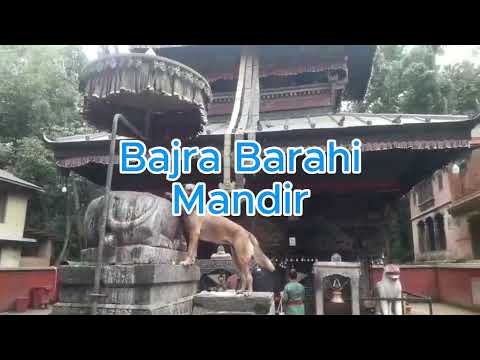
Bajra Barahi Temple

  This🙏 is an ancient temple of Nepal , located in chapagau , Godabari municipality of Nepal . The location of This temple is very natural...

Latest