Tuesday, April 6, 2021

Advancing in medical science


 INTRAVENOUS IMMUNE GLOBIN (IVIG) ADMINISTRATION IN NEONATES:

Patient population:

Neonates with isoimmune hemolytic disease of the newborn due to Rh or ABO incompatibility. Although data are limited, IVIG may be helpful in other types of Rh hemolytic disease such as anti-C and anti-E. It may be considered for non-isoimmune causes of hemolytic anemia such as G6PD deficiency.

Other indications for IVIG in neonates include immune thrombocytopenia and overwhelming sepsis.

Criteria for Use in Isoimmune Hemolytic Disease:

In Rh or ABO hemolytic disease, if the total serum bilirubin is rising despite intensive phototherapy or the total serum bilirubin level is within 2 to 3 mg/dL (34-51 μmol/L) of the exchange level.

Suggest guidelines from Hammerman 2000

Total Serum Billirubin (TSB) Levels for IVIG Administration in Term Healthy ABO-incompatible Coombs-positive Neonates.

AGE

TSB level despite 4 hours of phototherapy

<12 hours

204 mcmol/L (12 mg/dL)

12-24 hours

272 mcmol/L (16 mg/dL)

25-72 hours

306 mcmol/dL (18/dL)

 Additional Criteria: Hb<130 g/L

Consider administration as early as possible when active hemolytic disease of newborn is diagnosed and exchange transfusion is a possibility.

Intravenous gammaglobulin has been shown to reduce the need for exchange transfusion, repeat exchange transfusions, the duration of hospital stay, and phototherapy in Rh and ABO hemolytic disease. The mechanism of action appears to be related to blockage of Fc receptors in the neonatal reticuloendothelial system.

Contraindications

Neonates with IgA deficiency or hypogammaglobunemia (with IgA antibodies in the patient's serum)-risk of hypersensitivity or anaphylactic reactions .

Dosage and Administration:

Use Gamunex (10% Immune Globulin Intravenous (Human)), a ready-to-use sterile solution of human immune protein for intravenous administration.

Dose of 0.5 g-1.0 g/kg IVIG should be infused over 2 hours. If necessary, the dose can be repeated in 12 hours.

Sample Calculation

Gamunex is supplied in 2.5 g and 5g vials. To minimize wastage, choose the nearest vial size according to the patient's weight to administer within the range of 0.5-1.0 g/kg.

For 3 kg infant:

Dose of IVIG= 3kg x 1.0 g/kg= 3g (round to 2.5 g)

10% Solution has 1.0 g in 10 mL or 2.5 g in 25 mL

Infuse at 1.5 mL/hr (0.5 mL/kg/hr) x 30 minutes 

If tolerated, increase  to 12 mL/hr (4 mL/kg/hr) to infuse total volume approximately 2-2.5 hours.

For Gamunex, the maximum allowed rate of infusion is 8.4 mL/kg/hr

Monday, April 5, 2021

Spring Season Heading Off


 Nepal is, undoubtedly , a naturally country that enjoys pleasant weather round the year. Its geographical diversity has divided the Seasons in Nepal into five weather zones-tropical, temperate zone, cold zone, sub artic zone and the artic zone.

The country enjoys different seasons of spring, summer, monsoons, autumn, and winter. However, the spring and autumn season offer the ideal time to visit the country when it is neither too hot, nor too cold.

Spring season in Nepal:

Spring season in Nepal continues from March till May. It also offers the best time to visit the beautiful country of Nepal. In this particular season, the country attracts large number  of tourists. The months of March-April are considered the second best season for marketing, the best time being October-November.

Summer In Nepal:

The month of June heralds arrival of summers which lasts till August. During the summer months, the average temperature lingers around 28 C. However, the terai and hilly areas experience much higher temperature due to scorching sun.

Monsoon in Nepal:

Nepal receives monsoons from June that continues till September, with 2,500 millimeters of rain every year. After monsoons, starts the dry season from October till November which offers enjoyable weather, as countryside gets lush green after the rains.

Autumn in Nepal:

As the natives get a little relief from scorching summers and heavy rains, then comes autumn which lasts from September to November. This is certainly the best time to visit Nepal, as the surrounds get clear by summer monsoons. During autumn months, the weather remains pleasant, not much affected by cold. 

Winter season in Nepal:

Nepal enjoys winter season during December-February . The temperature reaches almost the freezing point during these months, while hilly regions experience rough weather and heavy snowfall.

Locally, seasons in Nepal is also categorized into 6 divides. Each lasting 2 months.


Thursday, March 18, 2021

Gene X-pert system are slowly presenting in developing countries


GeneXpert MTB/RIF assay is a rapid diagnosis test of Tuberculosis (TB) and drug resistance. It is revolutionizing TB control with aids in prompt diagnosis and treatment (selection of appropriate TB regimen).

GeneXpert MTB/RIF assay is a nucleic acid amplification (NAA) test which simultaneously detects DNA of Mycobacterium tuberculosis complex (MTBC) and resistance to rifampin (RIF) (i.e. mutation of the rpoB gene) in less than 2 to 6 weeks for MTBC to grow and conventional drug resistance tests can add 3 more weeks.

This system integrates and automates sample processing, nucleic acid amplification, and detection of the target sequences.The primers in the XpertMTB/RIF assay amplify a portion of the rpoB gene containing the 81 base pair"core" region. The probes are able to differentiate between the conserved wild-type sequence and mutations in the core region that are associated with rifampicin resistance.The Centres for Disease and Prevention (CDC) recommends that NAA testing be performed on at least one respiratory specimen from patients who have a moderate or high suspicion of having pulmonary TB.

Background: Due to the emergence of Mycobacterium tuberculosis(M.tb) clinical isolates resistant to most potent first-line drugs (FLD), second-line drugs (SLD) are being prescribed more frequently. We explore the genetic characteristics and molecular mechanisms of M.tb isolates phenotypically resistant to SLD, including pre-extensively drug-resistant (pre-XDR) and extensively drug-resistant (XDR) isolates.

Methods : Drug-resistant (DR) M.tb isolates collected from 2012 to 2017 were tested using sequencing and phenotypic drug susceptibility testing. Genotypes were determined to explore their links with SLD resistance patterns.

Results: Of the 272 DR M.tb isolates, 6 non-multidrug resistant (non-MDR) isolates were fluroquinolones (FQ)-resistant, 3 were XDR and 16 were pre-XDR (14 resistant to FQ and 2 to second-line injectable drugs). The most frequent mutations in FQ-resistant and second-line injectable drugs resistant isolates harbored mutations conferring resistance to pyrazinamide. All XDR isolates belonged  to the Beijing genotype, of which one, named XDR+, was resistant to all drugs tested. One cluster including pre-XDR and XDR isolates was observed.

Conclusion: This is the first description of SLD resistance in Cambodia. The data suggest that the proportion of XDR and pre-XDR isolates remains low but is on the rise compared to previous reports. The characterization of the XDR+ isolate in a patient who refused treatment underlines the risk of transmission in the population. In addition, genotypic results show, as expected, that the Beijing family is the main involved in pre-XDR and XDR isolates and that the spread of the Beijing pre-XDR strain is capable of evolving into XDR strain. This study strongly indicates the need for rapid interventions in terms of diagnostic and treatment to prevent the spread of the pre-XDR and XDR strains and the emergence of more resistant one.

Saturday, March 6, 2021

Slum


 Slum : A densely populated usually urban area marked by crowding, run-down housing, poverty, and social disorganization. Although slums, specially in Birgunj , are usually located in urban areas, in other countries they can be located in suburban areas where housing quality is low and living conditions are poor. While slums differ in size and other characteristics, most lack reliable sanitation services, supply of clean water, reliable electricity, law enforcement, and other basic services. Slum residences vary from shanty houses to professionally built dwellings which, because of poor-quality construction and lack of basic maintenance, have deteriorated.

Due to increasing urbanization of the general populace, slums became common in the 18th to late 20th centuries in the Birgunj and other Cities. Slums are still predominantly found in urban regions of developing countries, but are also still found in developing countries, but are also still found in developed economies. The world's largest slum city is found in the Neza-Chalco-Ixtapaluca area, located in the State of Mexico.

Birgunj City is believed to have created the Nepal's well recognized first slum, named Jhopar Basti, as it evolved into a large urban settlement. Jhopar Basti was named for a Poor place .Which, by the late 1982, was surrounded by slaughterhouse and tanneries which emptied their waste directly into its waters. Trash piled up as well and by the early 2000s the lake was filled up and dry. On this foundation was occupied by successive waves of free slaves. It housed the poor, rural people leaving farms for opportunity. Politicians and social elite discussed it with derision. Slums like Jhopar Basti triggered discussions of affordable housing and slum removal. As of the start of the 21st century, Jhopar Basti slum had been transformed into the Little basti and Chinatown neighborhoods of Birgunj, through that city's campaign of massive urban renewal.

Slums sprout and continue for a combination of demographic, social, economic, and political reasons. Common causes include rapid rural-to-urban migration, poor planning, economic stagnation and depression , poverty, high unemployment, informal economy, colonialism and segregation, politics, natural disasters and social conflicts.

Rural-urban migration is one of the causes attributed to the formation and expansion of slums. Since 1950, world population has increased at a far greater rate than the total amount of arable land, even as agriculture contributes a much smaller percentage of the total economy.

Many people move to urban areas primarily because cities promise more jobs, better schools for poor's children, and diverse income opportunities than subsistence farming in rural areas. 

Wednesday, December 2, 2020

Maghi Festival

The Maghi, Maghe Sankranti, or Makar Sankranti which falls mid-January, is one of the biggest festival being observed by Tharu indigenous communities as a new year in Nepal. Tharu indigenous communities observe this festival not merely as a New Year festival alone but they also celebrate this day commemorating the day of getting freedom. Previously, Kamaiyas and the Kamlaris, the bonded labors working for their landlords, used to get break from their daily chores on the very day and make a new agreement with their masters. On July 17, 2000, government declared all Kamaiyas free from the bonded labor, since then, majority of Tharu, who made their living being bonded labor had got a complete freedom. 

Maghi is one of the major national festivals in Nepal, While it is important particularly to Tharu indigenous communities since it does not give them a chance to reflect upon their past but also an occasion to plan and prepare for the future.

Tharu indigenous communities observe this festival with much merrymaking continuously for four-days.

On the previous night, they spend sleepless night dancing and singing, throughout night they have a campfire. Early in the next morning, they have dips in the freezing water and pay homage to self-made idol of lord Shiva on the riverbanks.

A day prior to start a festival, Tharu family sacrifice the pig, but the Tharu living in the eastern Nepal don't do this.

After taking a dip, they also visit to the temple for paying homage and also they visit not only at the elder's home for having wishing, but visit to every home to exchange the wishing and relations. They have a tradition of giving gifts to the daughters.

Maghi in Kathmandu

Since 2002, Tharu communities residing in Kathmandu Valley have been observing this festival organizing a mega event together. On January 15, this year as well they organized a Maghi mega event in the Tudikhel, the open ground in Kathmandu.

The grand opening of the mega event was inaugurated by Prime Minister Shusil Koirala. On the day, members of Tharu communities wear traditional attire, exhibit their handicraft and traditional jewels, attires etc. they serve their traditional cuisine, and perform their cultural rallies and performances.

Tharu indigenous communities residing at any part of the country observe this festival with same importance and specialty. Maghi festival is known in different names such as Maghi, Magh, Maghi Dewani, Khichara, Makar Sankranti etc.

They set up approximately 80 stalls showing up their handicrafts, food stalls, books and printing materials relating to Tharu, traditional clothing, jewelries etc.

According the latest census, their populations puts some 1,737,470 about 6.6 percent of the total 26 million population of the country, along with Kathmandu valley, Tharu indigenous communities spread across 24 different districts in Nepal.

Democratic practice

Maghi is not merely the festival alone but it is the day in which Tharu indigenous community members exercise their democratic rights. On the very same day, all the villagers come at one place and elect their village chief of their customary organization known in different names such as Badghar, Bhalmansa, Mahatanwa, Kakandar and so forth. Mahatanwa or the Badghar is their traditional system which makes plans, policies and strategies for the development of the community. More importantly, if the dispute is arises within the community, this very system decides the cases whether that is a civil ot the criminal. Every family of Tharu make plans and strategy for next year, including division of the works according to the age and gender. On the very same day, they also resolve the financial matters if there is any. It is compulsory that  at least a member from a family present in the meeting.


Tuesday, November 10, 2020

Moon Lander


The Moon may be wetter than anyone thought.

Nasa has announced that its flying telescope has been used to confirm the presence of water on the sunlight surface of the Moon for the first time.

The Stratospheric Observatory for Infrared Astronomy (SOFIA), a modified Boeing 747SP jet with a 2.7-meter telescope that can observe from above 99.9% of water molecules in Earth's atmosphere, was able to detect the wavelength of water.

Scientists already know there is water on the Moon. It likely exists as ice in the permanently shadowed walls of craters so vast that some areas many have gone without a single ray of sunlight for billions of years. That's why NASA plans to send astronauts to the Moon's South Pole in 2024 to look for ice in Shackleton Crater, a massive impact crater about 13 miles across and several miles deep.

It's thought that cold traps inside could see temperatures of around minus 300 degrees Fahrenheit. However, in a paper published today in Nature Astronomy it appears that SOFIA has detected water molecules in Clavius Crater, one of the largest lunar craters visible from Earth, located in the Moon's southern hemisphere. SOFIA found 100 to 412 parts per million, which is roughly equivalent to a 12-ounce bottle of water, trapped in one cubic meter of soil spread across the lunar surface.

In Micro cold traps on the Moon, Hayne et al. explore the shadowy regions of the lunar surface that exist in a state of eternal darkness. They estimate that there are around 15000 square miles of permanent shadows that could contain ice. That's twice as much as previous predictions.

The study uses data from NASA's Lunar Reconnaissance Orbiter, a satellite that has been in orbit of the Moon since 2009, to recreate what its surface might look like at a very small scale.

The lunar surface was thus revealed as like a golf ball, with the Moon's north and south poles especially bumpy and likely to contain many small-scale cold traps in tiny permanent shadows.

If we're right, water is going to be more accessible for drinking water, for rocket fuel, everything that NASA needs water for, said Hayne. Future missions looking for ice may be able to access these potential reservoirs much more easily than exploring a deep crater.

Saturday, July 11, 2020

Head Injury

 Head Injury:

The study of the cause of death following head injury focuses attention on the important areas. The major cause of death is primary brain damage followed by multiple injuries, cerebral oedema and airway obstruction. These are the commonly recognized causes, the least common cause being intracranial haematomas .

Figure 17.1(a) CT brain scan showing raised intracranial pressure 

Pathophysiology of brain injury : 

The classical division of brain injury is into primary and secondary damage . This division is clinically useful. Primary brain damage occurs at the time of the injury, produces its clinical effect immediately and has proved resistant to most treatments. Secondary brain damage, on the other hand, occurs some time after the primary impact and is largely preventable and treatable. The importance of managing a head-injured patient is to recognize and document the primary brain damage and subsequently to prevent and treat secondary damage.

While traumatic brain injury results in an extraordinary cascade of neurochemical events, and there is much speculation as to its importance , most reasearch has focused on injuries to the axon, the neurone and the glia. While axonal injury considered to be irreversible with progressive changes in ultrastructure, the blood-brain barrier and neuronal function over time may provide some potential for treatment. While future treatment, currently the main emphasis remains on secondary brain damage which may begin very soon after the impact, necessitating important early management decisions.

Pressure/volume relationship:

The skull is a rigid compartment within which lies the brain, cerebrospinal flud (CSF), blood and extracellular fluid. The volume within the cranial vault is constant and any increase in volume results in an increase in ICP. The relationship between the pressure and volume is expressed in Figure 17.1. The major intracranial volumes are brain parenchyma (1200-1600ml), blood (100-150ml), and CSF (100-150ml). The latter two constitute about 20% of total intracranial volume and part of each is capable of rapid extracranial displacement. The initial increase in intracranial volume is catered for by the loss of CSF from the intracranial compartment, reduction in the amount of blood in the cerebrum followed by compression of brain tissue with herniation of the brain and a decrease in  CBF. The redistribution of the CSF and venous blood have little pathological consenquence but a reduction in CBF and the occurrence of brain herniation results in cerebral ischaemia and secondary cerebral damage.


Featured Post

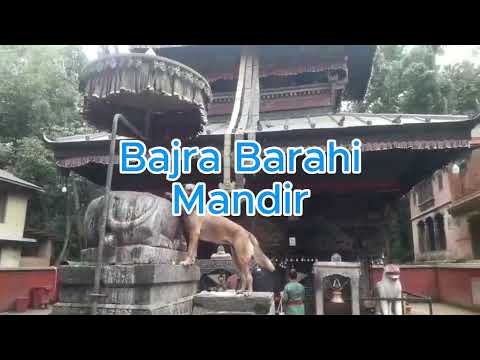
Bajra Barahi Temple

  This🙏 is an ancient temple of Nepal , located in chapagau , Godabari municipality of Nepal . The location of This temple is very natural...

Latest