Monday, September 11, 2017

INTERFACE

The interface of a book or anything is inside the contents of particular objects. The first part contains the preface, short notes, and a simple description of the book. The second part is acknowledge which tells about the book. The third part is the content that is the subject of the book that is inside the book and is summarized topically and numerically by the content. The last part is the index of the book or also called the glossary which contains brief notification of specific and difficult words.

In computing, an interface is a shared boundary in which information is exchanged between two or more different components of a computer system. Exchange can occur between software, computer hardware, peripheral devices, humans, and a combination of these. Some computer hardware devices, such as touchscreens, can send and receive data through an interface, while others such as a mouse or microphone can only provide an interface to send data to a given system.

Hardware interface
Main article: hardware interface
Hardware interfaces exist in many components, such as various buses, storage devices, other I / O devices, etc. A hardware interface is characterized by mechanical, electrical, and logical signals to interface and protocols for sequencing them (sometimes called signaling). A standard interface, such as SCSI, decouples the design and introduction of computing hardware, such as I / O devices, from the design and introduction of other components of the computing system, allowing users and manufacturers much to implement computing systems. Get flexibility. Hardware interfaces can be parallel with multiple electrical connections that carry parts of data simultaneously, or serial where data is sent one bit at a time. 

Software interface
See also: Application binary interface and application programming interface
A software interface can refer to a wide range of different types of interface at different "levels": an operating system can interface with pieces of hardware. Applications or programs running on the operating system may need to interact through data streams, filters, and pipelines;  And in object oriented programs, objects within the application may need to interact through methods. 

A key principle of design is to prevent access to all resources by default, allowing access only through well-defined entry points, namely interfaces. Software interfaces provide access to computer resources (such as memory, CPU, storage, etc.) of the underlying computer system; Direct access to such resources by software (ie, not through well-designed interfaces) can have major implications - sometimes disastrous for functionality and stability. 

Differences between software components can provide constants, data types, types of processes, exception specifications, and method signatures. Sometimes, public variables are also defined as part of the interface. 

The interface of a software module A is intentionally defined separately from the implementation of that module. The latter contains the actual code of the processes and methods described in the interface, as well as other "private" variables, processes, and more. Another software module B, for example customer A, which interacts with A, is forced to do so. Only through the published interface. A practical advantage of this arrangement is that B should not fail to replace A's implementation by another implementation of the same interface - how A serves the needs internally is not relevant to B, which Interface is only related to specifications. (See also Liskov substitution theory.)

In object-oriented languages
Main article: Protocol (Object-Oriented Programming) and Concept (General Programming)
In some object-oriented languages, especially those without complete multiple inheritance, the term interface is used to define an abstract type that contains no data but defines the behavior as a method signature. A class that contains code and data for all methods corresponding to that interface, and declaring so implements that interface.  Furthermore, even in single-inheritance-languages, one can implement multiple interfaces, and so can be of different types at the same time. 

An interface is thus a type definition; Any object can be exchanged (for example, in a function or method call) from an implemented interface or base-class, instead of specifying the specific class that is to be exchanged. Can be defined as one. This approach means that any class that implements that interface can be used. For example, a dummy implementation can be used to allow development before the final implementation is available. In another case, a mock or mock implementation can be substituted during testing. Such stub implementation is replaced by the actual code later in the development process.Usually a method defined in an interface has no code and thus cannot be called itself; It should be implemented by non-abstract code when applicable. [Citation needed] An interface called "stack" can define two methods: push () and pop (). It can be implemented in different ways, for example, FastStack and GenericStack — the first being faster, working with a fixed-size data structure, and the second using a data structure that can be shaped , But at the cost of some reduced speed.

However interfaces can have many methods in which they cannot have only one or even one. For example, the Java language defines an interface that is readable that has a single read () method; Different implementations are used for different purposes, including Bufferreader, FileReader, InputStreamReader, PipedReader, and StringReader. Marker interfaces such as serializable have no methods and serve to provide run-time information for normal processing using reflection.

Interface for programming
Allows to use interfaces for a programming style called programming for interfaces. The idea behind this approach is to base programming logic on the interfaces of the objects used, rather than on internal implementation details. The programming implementation on the interface reduces dependency on nuances and makes the code more reusable.

To top this idea, the inverse of the control leaves the context to inject the code that will be used to work with the specific implementation of the interface.

Sunday, September 10, 2017

Township


From the rise of the economic sector, the abandonment of the norm and the rise of the population, social and cultural development is called a township. Many things control the town planning, the management of the airport, the entrance of the city by which immigration is controlled in the city. The tunnel system is also a major problem in the township. Road construction, electricity, water supply, all these are the main things for management in the township. Mojority of people is working day and night, so it is important for safety reasons so that people can work independently without any hesitation. Nightclub, Police Department also needed. Bus stations, market place houses and apartments should be managed. In order to minimize and minimize crime, special protection must be managed.


In New Zealand in local government, there are no longer cities or townships. All land is either a "city" (mostly urban) or part of a "district" (mostly rural). The term "municipality" has become rare in New Zealand since around 1979 and has no legal status.

The term "township", however, is still in common use to refer to an urban community located in a small town or a rural area in New Zealand. The expression is usually equivalent to "village" in England.

In the Philippines, "townships" referred to administrative divisions established during the American civil government in the country. Many of these political divisions were originally established as ranchers during Spanish rule. The term was later changed to "municipal district". [1] Most municipal districts would later be converted into regular municipalities by executive orders of the Philippine President. [2]

Currently, Mambukal, a hill station geographically located in Murcia, Negros Occidental, is the only legally constituted township in the Philippines under the Republic Act 1964, which was approved on June 22, 1957. [Citation needed]

In modern days, the term "township" in the Philippines refers to new developments in both vertical and horizontal projects with their own facilities. The modern and largest townships in the Philippines are New Clarke City with 9,450 hectares in Capas in Tarakot, 5,900 hectares in Nasugu, Batangas, with 2,900 hectares in Hamilo Coast, Nuvali. Rosa of Laguna, Lancaster New City with 2,000 hectares in Kawit Emus Gentry of Canaite, Vista City with 1,500 hectares in Las Piñas Muntinlupa in Metro Manila, and Deserminas in Cavite, Twin Lakes with 1,149 hectares in Tagayte City in Cavite and 1, Alviera with 25,000 hectares. Porak of Pampanga. The majority of the current townships are located near Metro Manila, allowing for rapid entry into the capital region by road and / or rail transport.

In the context of the Russian Empire, Soviet Union and CIS states, the term is sometimes used as a small semi-urban, sometimes industrial, settlement and is used for translation. местечко (mestechko, from Polish "miasteczko", a small town; the latter is sometimes translated as shtetl in cases of major Jewish populations).
In South Africa, under apartheid, the term township (or place), in everyday usage, meant a residential development limited to non-whites (blacks, colored, and Indians) living or working only near white communities. Used to do it. Sowato ("SOuth-Western Townships") and Mdantsane are famous examples of this. However, the term township also has a precise legal meaning and is traditionally used on land titles in all areas, not just in non-white areas.

In England, the term township is no longer in official use, but the term still has some meaning.

In England, "township" was referred to a subdivision, administering a large parish. [3] This use became obsolete at the end of the 19th century, when local government reform transformed many townships that were themselves into new civilian mercury in the subdivisions of the ancient Parashars. This formally separated the connection between the eccentric works of ancient remuneration and the civil administrative functions initiated in the 16th century. More recently, some councils in the north of England have generally revived the term.

There are two types of townships in the United States; A state can have one or both types. In states that have both, the boundaries often coincide in many counties.

A civil township is a widely used unit of local government in the United States, which is under a county. The specific responsibilities and degree of autonomy vary depending on each state. In many states, townships are organized and operated under the authority of state statutes similar to counties. In others, townships operate as municipal corporations - chartered entities with a degree of home rule. Corresponding to a village, city, borough or town, city of New England or towns in New York.
A survey township is a unit of land measurement defined by the public land survey system

In Australia, the designation of "township" traditionally refers to a small community in a small town or rural district; In England such a place may qualify as a village or a village. [Citation needed] This term refers to a complete settlement; It does not refer to a unit of government; The township is controlled as part of a larger (eg, shire or city) council.

In Canada, two types of townships are in common use.

In eastern Canada, a township is a form of subdivision of a county. In Canadian French, it is a canton. The township is referred to as "lot" in Prince Edward Island; They form only census subdivisions and are not administrative units.

Saturday, September 9, 2017

Free Faling

Sometimes,  someone or an object falling or decreasing value from hype called as Free Falling. Sometimes people don't know where should move their destination,  where to proceed,  unknowingly they are working in wrong way. People spending their time unwanted,  by last they didn't get anything and become depression syndrome.  At last don't know the way of progress and at last they lost their time and didn't get anything and become dependable.

Falling is a multi-colored cowl with different textures and sewing patterns. Play with colors, stripes, textures and laces to weave the cow you love. Use the provided sewing pattern or close with your own creations.

The cowl is woven into a round using long circular needles, using short circular needles or magic loops. The pattern includes step-by-step instructions for creating a sample cowl, exactly as in the picture, and a generalized recipe that you can use as the basis for your freestyle cowl.

The pattern is written with both metric and US terminology. All sewing pattern instructions are given in both written and charted format.

material
The thread
Nearly. Like you in as many colors as 500-5050 m / 550-1010 yards load pieces, leftovers, specimens, mini skeletons, half skeletons, shield sets, or marigold tails.

For a drape cowl, use single-ply yarn, such as Superwash Merino. For a ventilated and ethereal look, use a mohair or brushed alfaca for lace sections.

Needle

3.5 mm / US # 4 short circular needle (40 cm / 16 ”) or long circular needle (80–100 cm / 32–40”) for working in the magic loop
Or choose a needle shape that gives you the fabric you love.
idea

A stitch icon
Daring needle
last option

Circumference: approx. 60 cm / 24 ”
Length: approx. 70 cm / 28 ”(or adjustable)
Technology used
The pattern uses the following techniques: working in round, twisted stitches and lace. Instructions for sewing patterns are given in both written and charted formats.

Give reference
To avoid jogs while weaving the stripes in the round, work one round in the new color and then either

Method # 1 - Move the first stitch of 2 rounds: http://bit.ly/joglessstripes1, or
Method # 2 - Pick up the old color under the first stitch of the round and K2tog with the new color: http://bit.ly/joglessstripes2
Stretching bind-off methods

Russian dam-off: http://bit.ly/russianbo
Lori's Twist Bind-Off: http://bit.ly/loristwistybo
Gratitude
A big thank you to all my test takers: aednat, hovilee, MargiBorck, and TatiMatica!


Kera Kokoon Ihanimat Jamalkasi Ja Partha Vapsen Pudukotsen…

Falling on Munivarin Tubuhivi, Josa on Erisicia tekstuyureja j Mallinuta. Leikitelle Varella, Rideoilla, Erylicella pinnoillaea ja Pitsuinuilla. Kaito Joko Ogesa Ihadotettuja Mallineuleta Tai Sommitte Juri Oman Milesi Mukenen Tubi.

Free Falling Neolotae piaunulena Joco lelelella Pyrogpueicola tai pidmilimai Paiopoecloella lupetane. Ohiocera on keros krölskelta kirzoisetut ohjet juri kuwisa acintivlan kultaisen huivine tai voet myos kyeta-ye yisusluonista receptia juri hallumasi tubuihuvin nulomisi.

Ojit Kaikkin Pits- Tai Pintanelysin on Acetetti Seca Salicesti Ettai Kavaomodosa.

TARVIKKEET
Lanka
N. 500–650 m Fingering-Wahvisia Jamie, Minhyehteja, Ntiteita, Pulikitata Carey, Liukuvrysetja Tai Unicornaseja Neon Monsa Viennisa Kuin van Hal.

Kaunisti Lasketuwan Tubuihuvin Saat Katitalem Yaksisaiisii ​​Lancoza, Asim. sinkkumerinoa. Kavetta Ja ilmavutta tubinin sa kyttamallo pitsinuleosiohin joten proroista Lanka, Kutan Mohariri Tai Harjattua Alpakka.

Puikot

3.5 mm lyhyt pyöröpuikko (40 cm) tai pidumpi (80–100 cm) lupamycin.
Tai Velitse Puikoko Kassalasi Ja Halutun Nulpinan Mukan.
Mutt Tarvikeke

Silmukkamerkki
Päättelyneula
Valmin Huivin Kochow

Yampritismita: n. 60 cm
Pituatus: n. 70 cm (Tai Vapapasti Muoktavisa)
KYTETYT TEKNIIKAT
Ohgesa cayetetaea serurvia techinicoita: Pionule, Kiretti silmukat J. pitsinule. Ojit Ari Pintanulaciens on Acetatei Seca Sanaliciesti Etta Caviomodosa.

Sunday, September 3, 2017

HUNGER


While attention to hunger relief had been increasing since the end of the 19th century, Drs. David Grigg has summarized that before the end of World War II, world hunger gained foreign less alchemical or political attention; Whereas after 1945 there was an explosion of interest in the subject.

After World War II, a new internal political-economic order came into existence, which was later described as Embedded Liberalism. For at least the first decade after the war, the United States, by then the most prominent national official of the period, strongly supported efforts to cope with world hunger and promote international development. It carried out the development programs of the United Nations and later the efforts of other multilateral organizations such as the International Monetary Fund (IMFF) and the World Bank (WHB).

The newly established United Nations has become a leading player in coordinating the global fight against hunger. The United Nations has three agencies that work to promote food security and agricultural development: the Food and Agriculture Organization (FAO), the World Food Program (WFP) and the International Fund for Agricultural Development (IFADI). FAO is the world's agricultural knowledge agency, providing policy and technical support to independent countries to promote food security, nutrition and sustainable agricultural production, especially in rural areas. The major mission of the WFP is to deliver food to the hungry poor. The agency steps in during the situation and uses the food to assist in the settlement after the situation. Its long-term approach to hunger helps from recovery to development. IFAD, with its knowledge of rural poverty and a particular focus on poor rural people, implements bookings and designs to help people access the wealth, services and opportunities they need to overcome poverty is. it happens.

After Germany and Japan's successful post World War II, the IMF and the WB began to focus their attention on the world. A great many civil society were also active in trying to deal with the legal hunger, especially after the 1970s when global media began to bring widespread attention to the plight of starving people in places like Ethiopia. Most important of all, especially in the late 1960s and 70s, the Green Revolution helped improve the spread of agricultural technology around the world.

The United States began to change its approach to the problem of world hunger from the mid-1950s. Influential members of the administration became less risky about the ways they viewed promoting dependence on the state, fearing that it might help spread communism. By the 1980s, the previous consensus in favor of liberal government intervention was subverted in the Western world. The IMF and the World Bank specifically began promoting market-based solutions. In cases where countries have become dependent on the IMF, they have sometimes forced national governments to prioritize repayment of debt and drastically cut major services. This sometimes negatively impacted efforts to combat hunger.

The increasing use of irrigation has played a major role in the Green Revolution.
Events such as Food First raised the issue of food sovereignty, claiming that every country on earth (some city-states with potential modern exports) has sufficient agricultural capacity to feed its own people, but that "free trade" is economic The order, which was linked to entities such as the IMF and the World Bank from the late 1970s to 2008, prevented this from happening. The World Bank itself claimed that it is part of the solution to hunger, stating that the best way to break the cycle of poverty and hunger is to build X-based economies to buy food items on the world market is. Provide financial means. However, in the early 21st century the World Bank and IMF became less dogmatic about promoting free market reforms. He swiftly returned to the view that government intervention is a role, and that it might be appropriate for governments to support food security with policies suited to domestic agriculture, even for countries whose territories Does not have comparative advantage. As of 2012, the World Bank is active in helping governments intervene against hunger.


At least until the 1980s — and, to a lesser extent, in the 1990s — the dominant academic view of world hunger was that it was a problem of demand over supply. The proposed solutions often focus on increasing food production and sometimes on birth control. There were exceptions to this, in the early 1940s, Lord Boyd-Org, the first head of the FAO of the UN, considered hunger as a mass distribution problem, and laid out a comprehensive plan to fix it.


In politics, humanitarian aid, and social science, hunger is a condition in which a person is, for a sustained period, unable to eat enough food to meet basic nutrition.

Throughout history, parts of the world's population often experience constant periods of hunger. In many cases, this resulted in disruption of the food supply due to wars, plagues or adverse weather. For the first few decades after World War II, technological advances and advanced political cooperation suggested that it may be possible to substantially reduce the number of people suffering from hunger. While progress was uneven, by 2000 the risk of extreme hunger for many people in the world was reduced. According to WFP there are some statistics that, "Some 795 million people in the world do not have enough food to live a healthy active life. It is one of nine people on Earth. The majority of the world's hungry people live in developing countries ., Where 12.9 percent of the population is low. "

By July 2012, the 2012 US drought already caused a rapid increase in the value of cereals and soy, with a knock on the price of meat. Increased prices on global markets, along with affecting hungry people in the US; America is the world's largest exporter of food. This led to talk about a possible third 21st century global food crisis. The Financial Times reported that BRICS may not be as badly affected by the crises of 2008 and 2011 as before. However, small developing countries that import a large portion of their food may be hit hard. The UN and the G20 have started contingency planning to be ready to intervene if a third global crisis arises.  As of August 2013, concerns were bye-off, well above the average grain harvest expected from major exporters, including Brazil, Ukraine and the US . There was also a good worldwide harvest in 2014, leading to speculation that grain prices may fall soon. 

At a summit held in Dublin in April 2013 following the 2015 MDG Framework for Hunger, Nutrition, Climate Justice and Global Justice, Ireland's President Higgins stated that only 10% of deaths from hunger are caused by armed conflict and natural disasters, Those with ongoing hunger. Both "the greatest moral failure of the current global system" and "the greatest moral challenge facing the global community".  A June 2013 Hunger Summit held in London hosted new commitments of $ 7.15 billion to combat hunger. The governments of Britain and Brazil, together with The Children's Investment Fund Foundation. 

Despite the hardship caused by the 2007–2009 financial crisis and the global increase in food prices occurring at the same time, the United Nations' global figures are close to a year-on-year reduction in worldwide starvation numbers. By 2019, however, evidence had increased that this progress has reversed in the last four years. The number suffering from hunger had risen both as a whole, and also at a very slow rate as a percentage of the world's population. 

Hunger Relief Organizations
Several thousand hunger relief organizations exist around the world. Some but not all are devoted solely to fighting hunger. They serve only one area, from independent soup kitchens to global organizations. Organizations working at the global and regional levels often focus their efforts on helping to provide better feedback to hungry communities, for example by sharing agricultural technology. With few exceptions, locally working organizations focus more directly on providing food to the hungry. Many institutions are connected by a network of national, regional and global alliances that help them share resources, knowledge and coordinate efforts. 

Global
The United Nations is central to global efforts to relieve hunger globally, in particular through FAO, and also through other agencies: such as WFP, IFAD, WHO and UNICEF. FAO's Endinghungar campaign is an online communication campaign aimed at raising awareness about the problem of hunger. It has created viral videos depicting celebrities expressing their anger about the large number of hungry people in the world.

After the Millennium Development Goals expired in 2015, the Sustainable Development Goals (SDGs) became key objectives to shape the world's response to development challenges in the form of hunger. Specifically in Goal 2: Zero Hunger has set globally agreed goals to end hunger, achieve food security and improve nutrition, and promote sustainable agriculture. 

In addition to UN agencies, hundreds of other organizations solve the hunger problem globally. These include national governments, religious groups, international charities and in some cases international corporations. However except for perhaps in cases of donations, the priority for these organizations to provide relief from hunger may vary from year to year. In many cases organizations partner with UN agencies, although often they can pursue independent goals. For example, by 2030 a consensus had begun to be reached for the SDG Zero Hunger goal with the aim of ending hunger, by 2025 many organizations with more ambitious goals took the initiative to achieve this result quickly:

In 2013 Caritas International launched a Caritas-wide initiative aimed at ending systemic hunger by 2025. A human family advocates raising food awareness for all campaigns, improving the impact of Caritas programs and implementing food rights. 

The partnership Compact2025, led by IFPRI with participation from UN organizations, NGOs and private foundations [62], provides evidence for politicians and other decision-makers aimed at ending hunger and malnutrition in the coming 10 years by 2025. Develops and disseminates based advice.


Wednesday, August 30, 2017

Missed Calls

MISSED CALLS

It is not received call, when a telephone perform intentionally or by mistake . It is horrible when some in danger but receiver do not receive the telephone. Sometimes , someone wants to bluff the person then they will perform missed calls. It will let people to angry. In lovers when lover missed call to his or her they get playing around by missed calls and saying so sorry by not receiving phone calls.

Missed calls have been adopted as a method of mobile permission marketing, known as missed call marketing (MCM).  MCM campaigns take advantage of how cellular providers can deliver unlimited incoming calls and text messages: advertisements contain instructions for customers to make missed calls to a particular number. The number can be configured to automatically hang the caller when dialing.  The number then returns calls or texts with supplementary material, such as product information, offers, or sponsored celebrity messages. Advertisers can retain callers' phone numbers to create customer databases, which can be used for future engagement and analytics. 

MCM is a major practice in India, where it appeals to the country's cultural and economic environment. At least 90% of all cellular phone users in India are on prepaid services, feature phones are still common,  Internet access is not widely available in some rural areas , And following is market penetration for mobile broadband services.  Along with advertising, missed call numbers are also used for other services, such as telephone banking, as well as program listings and viewer votes by television channels. 

There are several companies that specialize in MCM, including Flashcall, VivaConnect, and Zipdial. The zipdial was popularized by cricket scores and missed call services for Anna Hazare's anti-corruption movement; The company was acquired by Twitter in 2015 for a price between US $ 20 and $ 40 million, after serving more than 415 million calls in its first three years of operation.  In 2014, social networking service Facebook announced that it would support missed call numbers as an ad format, with its advertisements in emerging markets such as Brazil, India, Indonesia and South Africa. As part of the effort to grow the business. The company partnered with ZipDial and later VivonConnect to offer this service. 

In 2013, Hindustan Unilever launched Cannes Khajura Tesan (earworm radio), a missed call service that plays blocks of Hindi entertainment content (such as Bollywood music and devotionals), intercepted with advertisements for the company's brands is. Unilever aimed the service as a way to engage consumers in markets unaware of media and Internet communications (such as Bihar, where the service was described as the state's most popular "radio station"); By 2015, it had achieved 200 million raids. Companies that are not direct rivals of Unilever were also allowed to advertise on the service;  The campaign to promote the film Singham Returns through Cannes Khajura Tesan generated 1 calls million calls.  In 2014, Kan Khajura Tesan earned two Gold Cannes Lions in the media for "using audio" and "using mobile devices", and a third in mobile for "response / real time activity". In 2015, the campaign won the Bronze Lion for "Creative Effectiveness". 

MCM has faced criticism; Purani warned that "as the misuse of advertising leads to direct mail and telemarketing contributing to problems related to spamming, MCM runs the risk of being ingrained into marketing tools by a large number of phone users."  High-end brand. MCMs are considered unsuitable to target their respective markets.  Flashcall found that the concept was not viable in areas where missed calls were not an established social practice, such as the United States (where smartphones and mobile broadband are widely available). 

During the Indian anti-corruption movement in 2011, citizens could support Anna Hazare's campaign through a zip code. The number received 4.5 million calls, significantly increasing the number of Facebook likes and Twitter retweets that campaign posts received online. 

In January 2013, a protest was held against high mobile Internet rates in Bangladesh, with protesters exchanging millions of missed calls in an attempt to overload the cellular network simultaneously.

In 2014, the Aam Aadmi Party of India used missed call numbers for its recruitment drive. In less than a month, the line was used to recruit 700,000 new members. 

On 31 January 2016, Indian Prime Minister Narendra Modi's monthly radio address Mann Ki Baat became available on the phone through a missed call number. A government official said that from 31 January to 23 February 2016, more than 30 million calls were made, and 20 million unique calls were returned.

Missed calls have been used for fraudulent purposes in a scam called "Wangiri" or "One Ring and Cut". A scammer leaves a missed call using an international premium rate phone number, which tempts the recipient to call back and is charged as such.

Monday, August 28, 2017

Twomany ways to earn money from online


Fiverr : In February 2019, Fiverr acquired ClearVoice, a premium subscription-based content marketing platform. Founded in 2014 by Jay Swanson and Joe Griffin, ClearVoice is a venture-backed company headquartered in Phoenix, Arizona. Adding ClearVoice to the company's portfolio allows Fiverr to easily and consistently provide services for independent professionals as well as large businesses. 

Management

Micah Kaufman is the co-founder and CEO of Fiaver. Before co-founding Fever, Micah Kaufman received an LLB. Degree from the University of Haifa and established several technology ventures including Keynesis, Invisia and Spotback.  In an interview with the German newspaper Handsblatt in 2018, Kauffman spoke before Fiever about his difficulties in finding freelancers as a customer: "Finding freelancers wasn't fun ...", " ... You meet friends for recommendations. " You can show each other work, you learn how much money you want for something. Everything is very time consuming. "

Kauffman writes in several publications including Wired, Entrepreneur, and Inc., where he has argued strongly in favor of the gig economy in which Fiever operates. In March 2018, he suggested that making Uber and the ride-hailing industry the poster child for all independent workers distorts a major economic and social trend. 

Kaufman has assumed a position in favor of a single-payer healthcare system in the United States, speculating that having universal healthcare could encourage potential entrepreneurs to jump from traditional employment to start their jobs . 

gigs
Fiverr allows listing and applying for small jobs, or gigs, online. The jobs listed are diverse and "get a well-designed business card to help with HTML, JavaScript, CSS, and jQuery".  Fiverr is a company that models the listing of temporary work positions Freelancers work in a variety of workplaces, from home to office. 

User demographics
The Fiverr market is dominated by young adults (only 2% of sellers are over 55 years old); The company stated that the rate of vendors aged 55-64 increased 375% at the end of the second quarter of the year compared to the first quarter of the second quarter of the year. 

Criticism
Fiverr has received criticism for advertising very affordable graphic services. In late 2014, an advertisement on Fiverr's Facebook page stated that "you're paying too much for the design" which caused a public uproar. In 2013, Fiverr lifted the base price of five dollars and began allowing logo designers, graphic artists, voice over artists and other sellers to charge a base price for themselves.

In 2017, Fiverr was criticized for portraying ideals as being unhealthy and an overabundance in work behavior to live as ideals. 

In 2018, Fiverr received an "F" rating from the Better Business Bureau, the lowest grade that can be awarded. In 2019, Fiverr received a "B" rating after responding to customer complaints. 

IPO
On June 13, 2019, Fiverr listed the NYSE (New York Stock Exchange) under the symbol $ FVRR, trading 90% of its opening price on the first day of trading of the company, trading at $ 39.90. The stock quickly fell in price and as of 25 September 2019 the listed share price of Fiever is trading at $ 17.21 per share.

Fiverr was founded by Micha Kaufman and Shai Wininger, and was launched in February 2010. The founders came up with a marketplace concept that would provide people with a two-party platform to buy and sell a variety of digital services offered by freelance contractors. . Services offered on the site include writing, translation, graphic design, video editing, and programming.  Fiverr services start at US $ 5, and can go up to thousands of dollars with gig extras. Each service offered is called a "gig". 

The website was launched in early 2010 and by 2012 was hosting 1.3 million gigs.  Since 2011, website transaction volume has increased by 600%. In addition, Fiverr.com has been ranked in the top 100 most popular sites in the United States and in the top 200 in the world since early 2013. 

On 1 June 2010, Fiverr received a US $ 1 million seed investment from Guy Gzu and other angel investors, and in May 2012, Fiverr received US $ 15 million in funding from Accel Partners and Bessemer Venture Partners, leading the company The total funding went to the US. $ 20 million. 

In December 2013, Fiverr released its iOS app in the Apple App Store,  and in March 2014, Fiverr released its Android app in the Google Play Store. 

During August 2014, Fiverr announced that it had raised US $ 30 million in a round of funding series from Bessemer Venture Partners, Excel (formerly known as Excel Partners) and other investors. This round brings their total funds to US $ 50 million.

In October 2015, Amazon.com initiated legal action against 1,114 Fiverr sellers, claiming to provide fake reviews on the US version of its website. Fiever did not dispute Amazon's allegations, saying: "As noted by Amazon, we have worked together to remove services that violate our Terms of Use, and any reports of inappropriate content Immediately responds. " 

In November 2015, Fiverr announced that it had raised US $ 60 million in a Series D round of funding led by Square Pay Capital. This round brings their total funding to $ 110 million.  At the same time, the company announced that it was allowing sellers the ability to price producers at prices above the original US $ 5 price, known as gigs. 


Sunday, August 27, 2017

Witch Craft

Witch craft is just the property of humans, you must keep fear and control under control. According to most people who do not know about the witch craft, it is a ghost. Which, he saw invisibly, they can only feel what they had in their imagination, terrible faces, weed clothes, for the most part are bleeds. But in fact, witch craft is a distinction of human kind, but they do not want to tell you about this property, if you are under them, they will never be satisfied with your work, will always scold you and disappoint you.
Witchcraft (or witchcraft) is the practice of magical skills and abilities. Witchcraft is a broad term that varies culturally and socially, and thus can be difficult to define with precision; Therefore, cross-cultural beliefs about the meaning or significance of the word should be applied with caution.

Historically, and currently in most traditional cultures around the world - particularly in Asia, South America, Africa, African diaspora and indigenous communities - the term has generally been associated with those who harm innocent people Use spiritual means for.  In the modern era, mainly in Western popular culture, the term can usually refer to the gentle, positive, or neutral practices of modern paganism,  Such as divination or spelling. 

Belief in witchcraft often exists within societies and groups whose cultural structures include a magical world view. Belief in the concept of witchcraft and its existence is sustained throughout recorded history. They have existed or been central to cultures and religions around the world at various times and in many diverse forms, including primitive and highly advanced cultures,  and still play an important role in many cultures today. 

Historically, the dominant concept of witchcraft in the Western world derives from the laws of the Old Testament against witchcraft, and entered the mainstream when belief in witchcraft gained church approval in the early modern period. This reflects a theosophical conflict between good and evil, where witchcraft was generally evil and often associated with devil and devil worship. This led to widespread witch-trials and witch-hunting (blamed for tyranny),  and many years of witch-hunting and witch-hunting, especially in Protestant Europe, of the European era. Finished before Enlightenment. In modern day Christian views are diverse and cover the gamut of ideas from deep faith and opposition (especially by Christian fundamentalists) to non-faith, and even approval in some churches. From the mid-20th century, witchcraft - sometimes referred to as contemporary witchcraft, to distinguish it clearly from earlier beliefs - became the name of a branch of modern paganism. It is most prevalent in Wikken and modern witchcraft traditions, and is no longer practiced in secrecy. 

The Western mainstream Christian view is far from the only sociological view of witchcraft. Extensive practices and cultural beliefs continue in many cultures throughout the world, translated into English as "witchcraft", although the English translation provides a place for their forms, magical beliefs, practices, and place in their societies There is a huge variety. During the era of colonialism, many cultures around the world were exposed to colonialism in the modern Western world, usually before intensive Christian missionary activity (see "Christianization"). Beliefs in these cultures that were related to witchcraft and magic were influenced by the prevailing Western concepts of the time. Witch-hunting, scapegoats, and the murder or witchcraft of suspected witches still occur in the modern era. 

Due to beliefs about the disease caused by witchcraft, the suspicion of modern medicine also continues in many countries even today, which has sad health consequences. HIV / AIDS  and Ebola virus disease  are two examples of the often-fatal infectious disease epidemic, whose medical care and prevention have been severely hampered by regional beliefs in witchcraft. Other serious medical conditions whose treatment is thus interrupted include tuberculosis, leprosy, epilepsy and the common severe bacterial Burley ulcer.

The word witch is of uncertain origin. There are many derivatives that can be derived from it. A popular belief is that it relates to the English words "wit, intelligent, wisdom [Germanic root * weit-, * wait- * wit-; Indo-European origin * weid-, * woid-, * wide-];" Hence "craft of the wise." Another is from Old English, a compound of "witch" ("witch") and "crate" ("craft").

It is argued that the healing arts played an important and sometimes important role in seventeenth-century New England witchcraft disputes. Not only were physicians and surgeons the key professional arbiters for determining natural versus unnatural signs and symptoms of illness, they occupied key legislative, judicial, and ministerial roles related to witchcraft proceedings. The names of six male physicians, surgeons, and apothecaries belong to New England witchcraft in court scripts or other contemporary source materials. These physicians worked on interrogation of coroners, performed autopsy, testified, issued writ, wrote letters, or sent people to prison in addition to diagnosing and treating patients. Some physicians are referred to as having just passed.
Belief in malicious magic practices exists, such practitioners are generally considered prohibited by law and hated and feared by the general population, while beneficial magic is tolerated or accepted by people - even if conservative The establishment opposes this. 

spell casting
See also: Magic (Paranormal)
Probably the most widely known feature of a witch was the ability to cast a spell, the term "spelling" used to denote the means employed to perform a magical action. A mantra may include a set of words, a sutra or poem, or a ritual verb, or any combination of these.  Spells were traditionally given by several methods, such as by the inscription of a run or sigil on an object to give magical power to that object; By immersion or bonding of a person's wax or clay image (poppet) to magically affect them; By recitation of the Bhasmas; By performing physical rituals; By the employment of magical herbs in the form of amulets or potions; For purposes of divination by glass, sword or other divination (peek); And many other means. 

Necromancy (grooming the dead)
Strictly speaking, "necromancy" is the practice of mixing the souls of the dead for speculation or prophecy - though the term is also applied to raise the dead for other purposes. The biblical witch of Endor performed it (1 Sam. 28), and it is in the midst of the witch's practice, condemned by Yunsham of Yunsham: 28  "The witches still cross-road and with themselves Go to the burial call out deceptive magic and the devil, and he comes to the likeness of the man who is buried there, as if it arises from death. "

Demonology
Main article: Daemonology
In Christianity and Islam [citation needed], sorcery was combined with heretics and apostasy and viewed as evil. Between Catholics, Protestants, and the secular leadership of the European late medieval / early modern period, apprehension about witchcraft rose to a fever pitch and sometimes led to rampant witch-hunting. The major century was the fifteenth, which saw a dramatic rise in witchcraft and witchcraft terror, culminating in the publication of Malles Maleficarum, but produced by staunch fanatics such as Bernardino of Siena.  In total, tens or hundreds of thousands of people were executed, and others were imprisoned, tortured, deported, and confiscated land and property. Most of those accused were women, although in some areas the majority were men.  In early modern Scots, the term warlock is used as a male equivalent of a witch (which may be male or female, but is used primarily for women). 

Maelles melficherum, (Latin for "Witch of the Witch") was a witch-hunting manual written in 1486 by two German monks, Heinrich Kramer and Jacob Spranger. It was used by both Catholics and Protestants [38] for several hundred years, describing how a witch is identified, what makes a woman more likely than a man to be a witch, how a witch is on trial. How to be kept and punished The book defines a witch as evil and usually female. The book became the handbook for secular courts in Renaissance Europe, but was not used by Inquisition, which also warned against relying on the work. 

White witches
Main article: White Witch
More information: Folk Religion, Magical Thinking, and Laborism

A painting at the Rila Monastery in Bulgaria, sorcery and condemnation of traditional folk magic
During the early modern period, the English word "witch" was not particularly negative in meaning, and could also indicate clever folk. As Alan Macfarlane stated, "There were many interchangeable words for these practitioners, 'white', 'good', or 'unbinding' witches, blessings, sorcerers, magicians, though 'cunning-man' and 'wise-man'" Most often. " Contemporary Reginald Scott explained," To this day in the English language it is indifferent to say, 'She is a witch' or 'She is a wise woman. "

Featured Post

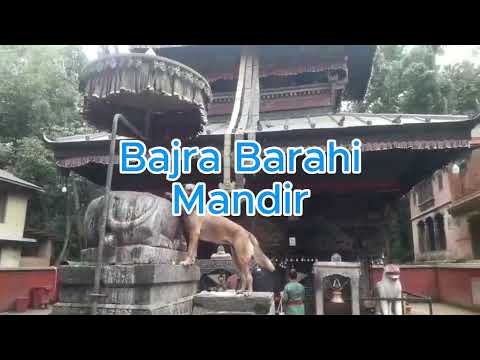
Bajra Barahi Temple

  This🙏 is an ancient temple of Nepal , located in chapagau , Godabari municipality of Nepal . The location of This temple is very natural...

Latest